Dry Needling in Knoxville & Powell, TN
At Main Health Collective, we provide personalized dry needling for patients in Knoxville, Powell, Karns, Halls, Hardin Valley, Oak Ridge, Farragut, and surrounding communities.
Whether you're dealing with persistent muscle tension, an injury that isn't resolving the way you'd like, or a movement restriction that's getting in the way of training and everyday life, we'll assess what's going on and determine whether dry needling is the right tool for you.
Dry Needling
Targeting Tight, Sensitive Tissue to Help You Move Better
When a muscle becomes tight, sensitive, or difficult to relax, it can affect how the surrounding joints and tissues move. Repetitive activity, overuse, injury, and changes in movement can all contribute to these areas of muscular tension.
Dry needling is a targeted treatment that can help reduce muscle sensitivity and tension, improve mobility, and make it easier to move through the rehabilitation process.
At Main Health Collective, dry needling is used as one tool within a broader, movement-focused approach, helping address the painful or restricted tissue while also looking at why it became that way in the first place.
What Is Dry Needling?
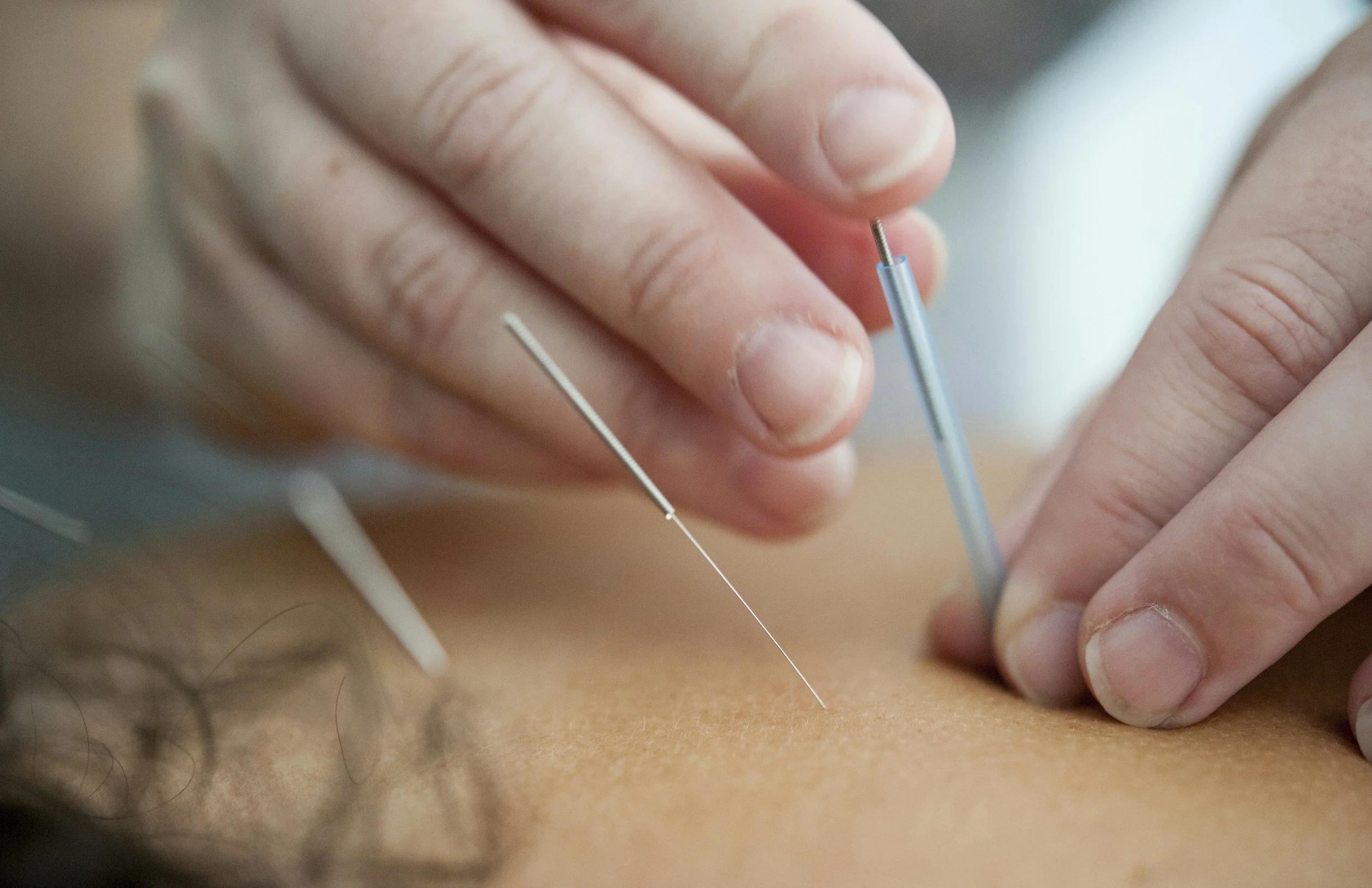
Dry needling uses thin, solid needles inserted into specific areas of muscle and soft tissue, often including myofascial trigger points. Unlike an injection, nothing is injected through the needle.
The needle provides a targeted stimulus to the tissue and nervous system, which may help reduce pain and muscle sensitivity, decrease excessive muscle tension, and improve movement.
Dry needling isn't about simply putting a needle into wherever it hurts. Your treatment is based on your assessment, your symptoms, and the movement patterns contributing to your presentation.
Does It Hurt?
Most patients tolerate dry needling well. Because the needles are very thin, insertion is often associated with little more than a brief sensation. When treating certain areas, you may experience a short muscle twitch or cramping sensation as the tissue responds.
It's also common to experience some temporary soreness or tenderness afterward, similar to what you might feel after exercise. This typically resolves within a day or two.
We'll always explain what to expect before treatment and adjust the approach based on your comfort level.
How It Fits Into Your Care
Dry needling is rarely the entire solution. It can help reduce sensitivity or tension in a restricted area, but the next step is teaching your body how to move and tolerate load more effectively.
That's why dry needling at Main Health Collective is often paired with chiropractic adjustments, soft tissue therapy, and functional rehabilitation.
Hands-on treatment can help address what's limiting you today. Rehabilitation helps build the strength, coordination, and capacity to keep moving well tomorrow.
That's the MHC approach: use the right tool for the problem, then address the factors that contributed to it in the first place.
Dry Needling vs. Acupuncture
Dry needling and acupuncture both use thin needles, but they are based on different clinical frameworks and treatment approaches.
Dry needling is primarily used within a musculoskeletal framework, targeting specific muscles, trigger points, and areas of pain or movement dysfunction. Acupuncture is a broader practice with its own traditional and clinical frameworks.
At Main Health Collective, dry needling is incorporated into a focused movement and rehabilitation plan rather than used as a standalone treatment.
What Can Dry Needling Help With?
Dry needling may be useful as part of treatment for:
Neck and back pain
Myofascial pain and muscle tension
Headaches associated with muscular tension
Shoulder pain and movement restrictions
Tennis elbow and golfer's elbow
Hip, knee, and ankle pain
Plantar heel pain
Sports and overuse injuries
Muscle strains and areas of persistent muscular tension
Pain associated with restricted movement
Whether dry needling is appropriate depends on your individual presentation. It's one tool we may use when it can complement the rest of your treatment plan.
The MHC Process
Your first visit starts with a real conversation: your history, your goals, and what's actually been getting in your way, followed by a thorough movement and joint assessment. From there, we build a plan specific to you.
Adjustments are rarely the whole story. When appropriate, they're paired with soft tissue therapy, dry needling, and functional rehabilitation to make sure the motion we restore is supported by the strength, control, and capacity to keep it.
This is root-cause care: find what's restricted, restore it, and build the resilience to keep it that way, so you can keep living and loving the life you lead.
Ready to move better? Let’s get you scheduled.